The Modern Web Is Even Worse In 2026
Back in 2020 (that was great year wasn’t it?) I wrote an article on this site about the state of
the web at that time, just over six years later, things are even
worse.
I started off said article talking about Youtube and the removal of the
non-polymer version of the website, forcing the use of the
JavaScript-heavy Youtube Web-App we still have today.
Since writing that article I have stopped using the Youtube website
altogether. For watching Youtube videos I now rely on RSS, yt-dlp, Invidious (which has been very flaky
lately for various reasons) and more recently Idiotbox for searching for
videos. So much so that I’m only aware how much worse Youtube’s
interface has gotten lately through either second-hand accounts or when
my Mum shows me WW2 recipe videos on her iPad, because I rarely ever
touch it anymore.
The web has gotten worse in the past six years not just because of increased dependence upon JavaScript or the further degradation of web design, but a few new major factors that I didn’t foresee when I wrote my original article. The most prominent of which being…
AI
Slop, slop, slop.
Please sir? May I have some more?
Slop!
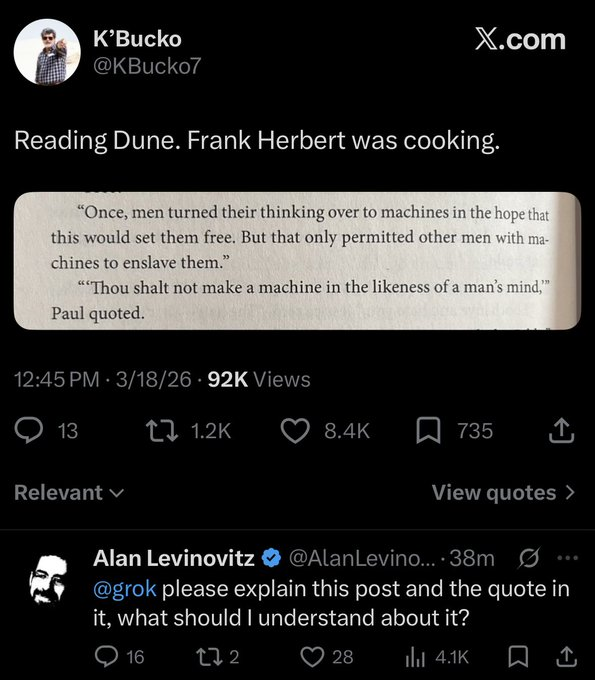
Slop is everywhere. Search Google: slop. Watch Youtube: slop. The source code of your web browser: slop. Most of the people on Twitter… ugh, sorry. Most of the people on “X” aren’t even real people and when they are they’re asking Grok to explain basic concepts to them because they can’t think for themselves anymore.
In the AI… arms race? gold rush? Whatever you want to call it, anything and everything that you or I or anyone has ever made, ever uploaded to the internet, is up for grabs. AI bots and crawlers are scraping everything. The very text of this article will probably be scraped and digested by some techbro’s little vibe-coded-in-python AI project by the time you read it. Chunks of my words, your words and the words of a single mother posting to Twitter in 2011, regurgitated as a fine paste into the eyeballs, through the optic nerves and processed by the rotting brains of Hackernews or Reddit readers this time tomorrow. AI is ruining the web just like it’s ruining everything else.
So many sites, especially smaller, self-hosted ones, are being inundated with AI bots scraping them, sucking up their work into their algorithms without permission, using up their bandwidth and resources, effectively DDOSing them. This means that measures have emerged to counteract this, projects such as go-away or Anubis. The problem with these measures is that they make sites slower and less accessible as they usually require JavaScript. Many instances hosting alternative front ends like Nitter or Invidious have these measures in place, along with other sites that make a point of being lightweight with simple HTML and do not otherwise use JavaScript. These sites now become dependent upon modern JavaScript by virtue of using such measures, making it harder to use alternative, simpler web browsers like W3M, Dillo or Links, which have limited (if any) JavaScript support, sometimes by design. Further locking us into the many bloated Chrome variants, the only alternative to which being Firefox (and forks thereof). But Mozilla, like the rest, is focusing on AI, inserting chatbots into Firefox and is vibe-coding the browser itself (though they’re hardly alone there).
The Death Of The Search Engine
Search engines have been getting worse for a while, even before AI came along. Google’s been messing with results ranking for years now, pushing ads and favouritism towards bigger (usually corporate-run) sites and serving you links to their own cached versions of websites rather than the real site itself. But in the age of AI, search engine results are often flooded with AI generated spam websites that only exist to collect ad revenue and engagement. You’ve probably had the following happen at some point over the last few years: You will for example, search how to do something, let’s say change a light bulb.
You’ll click on a result that looks like it’s going to answer your question:
Changing light bulbs in your home is one of those things that you may not have to do too often, but when you do, it’s a pain. Light bulbs are a difficult but necessary reality in our everyday lives, after all, we all need light on those dark evenings so we can still see what we’re doing.
But maybe you’ve never changed a light bulb before, after all, it doesn’t come up too often. Light bulbs tend to last a long time, but when they do die, it happens without warning. So, it’s best to be prepared when the day comes when you flick that switch and the light doesn’t come on.
Light bulbs may seem like a simple piece of technology, but it’s more complicated than people think.
For a start there are many different types of light bulbs and many different connections and knowing the difference between them is important.
Light bulbs were invented in the 1800s. Before the invention of the electric light bulb, people used to light their homes with candles, gas or oil lamps and household fireplaces (also known as hearths)…
This will carry on for paragraphs and paragraphs, always seeming like it’s about to get the point, but never does. Then you realise, this is just a wall of AI generated text that seems to be designed to waste your time.
Searching for images turns up just as much AI generated spam, this time in visual form. Sometimes it’s heard to tell if the photographs of 18th century English streets you’re getting are actually real or AI slop. More often than not I’ve found myself having to add search parameters like ‘before:2023’ just to weed out the synthetic fake images.
AI has rendered search engines borderline unusable just by flooding
the results alone. But of course, the search engine creators in their
infinite wisdom have added AI functionality into the search engines
themselves to summarise or answer questions.
So ask your search engine for information on how to make a pizza and it might well
come up with a recipe that includes glue, not
be able to define the word ‘disregard’ or tell
you that Australia isn’t a real country. Now in their latest Google
I/O conference, Google announced that they’re
essentially doing away with Google web search entirely and turning it
into an AI chatbot. In the ultimate act of Google killing everything,
they’re now killing the very product that put them on the map to chase a
bubble.
Age Verification
Within the past year, many countries have started implementing and pushing for invasive age-gating measures on the internet. Here in the UK, the Online Safety Act is now in effect, which I talked about in my previous article in September last year. Many states in the US are introducing their own laws, including a law requiring built-in age verification into operating systems themselves. Australia and Canada have also introduced their own online age-verification laws.
These laws, created under the guise of protecting children, are rather dubious. The age verification itself is usually done by private, American companies like Persona, which has ties to Palantir. Complying with the requirements of the Online Safety Act are trivial for Big-Tech companies, but difficult and often impossible for smaller, independent websites and platforms.
Let’s be honest, the web is dying
All this almost makes you nostalgic for the web of 2020 (did I mention what a great year that was?). What will the web of 2030 look like? Or 2036? Maybe we won’t even have websites anymore. Maybe we’ll just have vibe-coded Google Verified Apps and you’ll only be able to access approved Apps on the GoogleWeb with a Android phone or an iPhone with Safari (Powered By Google) and ask an AI chatbot nicely after a scan of your retinas.
So what do we do? I don’t know. I’m not sure there’s anything we can
do, not to make the web better anyway.
I think ultimately the answer is to move away from the web. We can
create new spaces with things like Gopher, Gemini (no,
not that
Gemini) or perhaps even alternative networks like Reticulum.
I also think it’s worth looking into going back to analogue alternatives. Information is becoming less reliable on the internet, so buy books (preferably older pre-AI books or books that you’re otherwise sure weren’t written using AI), for reference and information. If I go to a thrift, charity or antique shop (which I like to do at any opportunity) I’ll often just buy old non-fiction books for things like cooking, home management or other practical subjects. They might be antiquated but a lot of the information within is still relevant. I also recommend looking into getting a mechanical typewriter. Also consider older computer hardware, because this goes beyond just the web. Personal computing itself is under attack.
The web started out as a great idea, but has suffered from a major case of irreversible feature creep and is being thoroughly legislated into something that facilitates surveillance (though it has been doing so for a long time). Maybe it’s time to move on to something else. What if we can build something better?